
Elvis. Not that one.
Today’s topic of one-way spewing of words you’ll have to endure:
Elvis Costello said that writing about music is like dancing about architecture. Discuss.
Before I got too deep into this, I decided to look up the quote and see when it was said. Which matters because writing about music in, say, 1995 was kind of a different thing.
When you worked at Spin or Rolling Stone or Circus or 7ball or Cheetah or HuH or Raygun or Sluggo! or Wonka Vision — any number of real music magazines that actually used those names and existed before the prevalence of downloadable and streaming music — music criticism served an economic purpose.
A young Pete would go to Hastings, a record/book/movie store that was the first place I drove to solo when I got my license, and also a place where they seemed to have a serial pooper who kept taking dumps on the floor. This wide-eyed and cautiously narrow-nostril-ed youngster would usually have several different CDs he wanted to buy, but he definitely did not have the money to buy them all. So he had to make a choice, and sometimes that choice was informed by a number of different factors, and these factors were often discussed in music journalism.
I remember Weezer’s green album was lambasted for coming in at a total run time of 28:23, which is admittedly a shorty.
I COULD buy a 28-minute album, but it cost the same as a copy of reLoad by Metallica, which came in at a heftier 76 minutes and 3 seconds, almost three times as long.
But on the OTHER hand, maybe reLoad would be like an all-you-can-eat buffet: sure, there’s a lot of it, but does that make for a better dinner than eating something that’s smaller, less satisfying in terms of quantity, but perhaps more to your taste?
This is also why I suspect you see a lot of Greatest Hits albums in thrift stores today. The way people access music today, the concept of a Greatest Hits album doesn’t really make sense. You can just cobble together a KISS playlist instead of buying their latest Greatest Hits album. By the by, did you know KISS Greatest Hits compilations outnumber their studio albums?
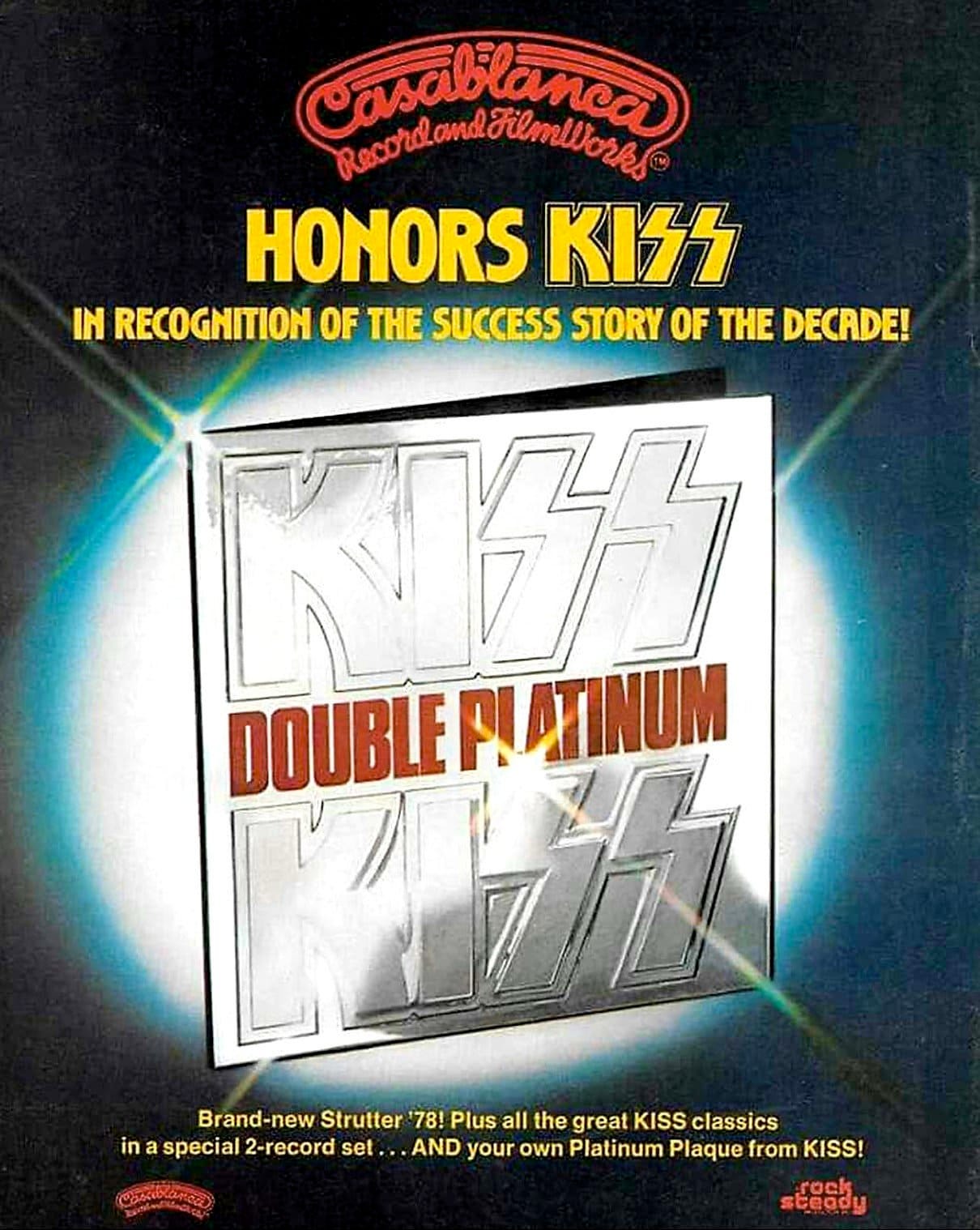
But back in the day, a young Pete might go ahead and buy a Greatest Hits album because, dollars in to enjoyment out, it was the best deal.
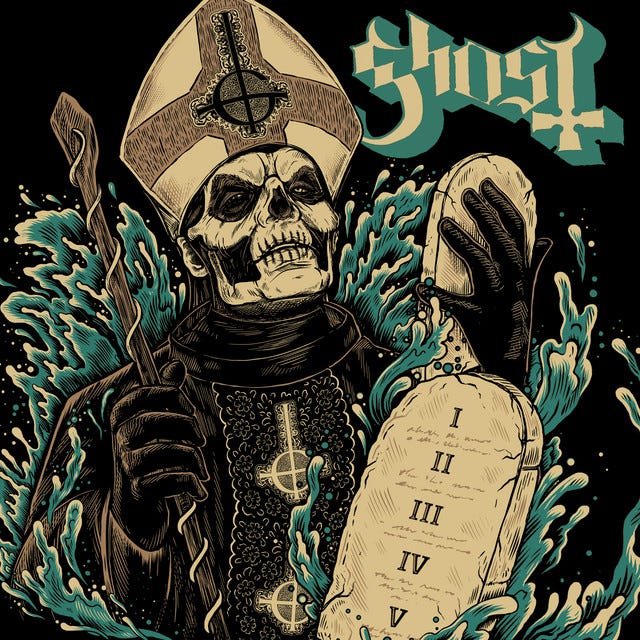
Today, a band might put out a greatest hits if they perhaps have a good number of albums out and want to create a good jumping-on point for new fans. Ghost has done this a couple times, although I don’t believe these albums are for sale, they just live on streaming platforms.
So I would argue with the quote, if it was an old one, because I think writing about music is like dancing about architecture if the dance is an interpretive one that explains changes required to make the building LEED certified.
It turns out, the quote is not only old, but it may be older than Elvis Costello himself.
See, the saying has its own Wikipedia page, and it’s been attributed to William S. Burroughs, Miles Davis, Thelonious Monk, Charles Mingus, Frank Zappa, George Carlin, Martin Mull, Lester Bangs, David Byrne, Steve Martin, Elvis Costello, and Laurie Anderson.
And in the entry’s opening, we can read:
The quote’s origin is unknown. It is most commonly misattributed to musicians Laurie Anderson and Elvis Costello. Others, including Costello himself, credit the remark to comedian Martin Mull, although a variation (”talking about music is like singing about economics”) has appeared in print since as early as 1918.
Now Martin Mull is a name you might recognize, but you probably don’t know from where. He’s a member of the “Oh, yeah, that guy!” club.
Here’s a picture of him:
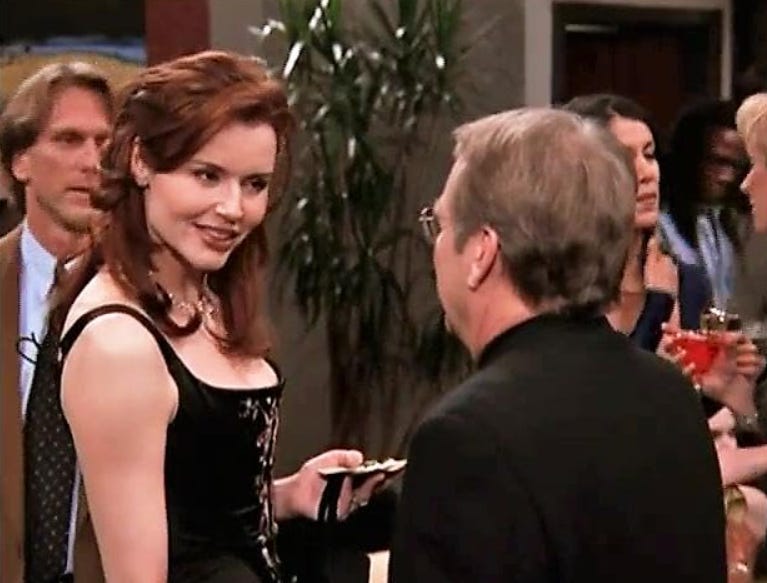
Well, a 1/4 profile, anyway. He was on The Geena Davis Show, a confusing sitcom where Geena Davis didn’t play herself, but the show was named like she did. I’m sure you can find a better picture of Mr. Mull out there, I’m just admittedly more interested in 90s Geena Davis than I am in 90s Martin Mull, even if he did say a clever thing.
Elvis Costello’s quote came from an interview in 1983, and it was a response to someone asked about how he felt he’d been treated by the music press. Here’s the more accurate quote:
Writing about music is like dancing about architecture—it's a really stupid thing to want to do.
I guess this would imply that his feelings about his treatment by the music press could be summarized as, “Not great.” I mean, if I wrote songs instead of these dumb newsletters, and if everyone said those songs were excellent, I probably wouldn’t react by saying I thought they were all really stupid for writing about my work.
ALSO, I found that there is a ballet called Skyscrapers from 1926, which is, basically, dancing about architecture. Now, I can excuse Mr. Costello for not knowing about it because, I mean, who knows anything about ballet? Maybe if it didn’t insist on that Frenchy silent “T” on the end, we could all see our way to appreciating it, but until that day comes, Ballet? No way.
Mr. Costello, I guess I disagree with you, mostly because this newsletter is proof that you can write about anything. And, yes, it’s pointless. Sure, it’s stupid. It’s a stupid thing to want to do.
But we all have to make a living.
Which means we also have to find other activities that balance out the making a living part of life. Because, man, work sucks.